
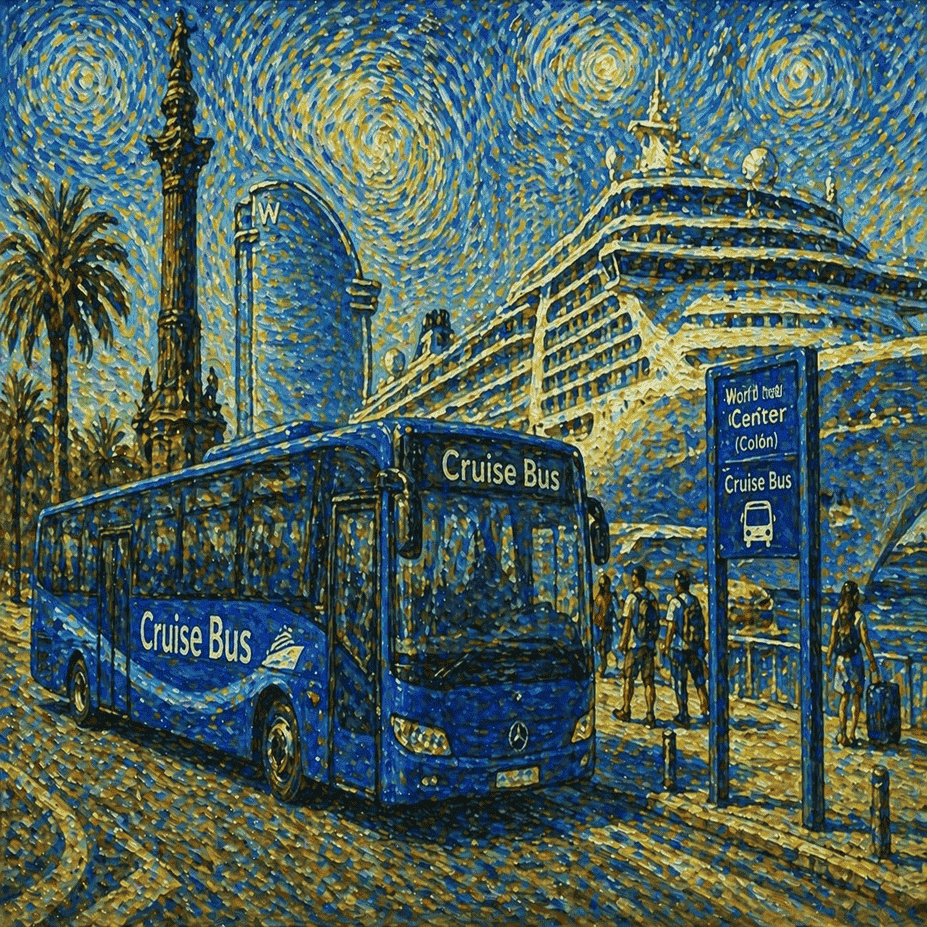
Cuando bajas de un crucero en Barcelona, una de las primeras dudas es cómo salir del puerto sin perder tiempo. Aquí es donde entra en juego la lanzadera oficial, conocida como Cruise Bus o T3 Portbus, que conecta directamente las terminales con el centro.
Es un servicio sencillo, pensado específicamente para cruceristas, y en la práctica suele ser la forma más rápida de empezar el día sin complicaciones.
El autobús conecta todas las terminales del Port de Barcelona (A, B, C, D y E, en el Moll Adossat) con la zona del Monumento a Colón, en el Portal de la Pau, justo al inicio de La Rambla. Es decir, te deja directamente en una de las puertas de entrada más prácticas al centro.
El trayecto es corto, normalmente entre 10 y 15 minutos, y funciona de forma continua mientras hay actividad de cruceros en el puerto.
Uno de los puntos más importantes a tener en cuenta es que este autobús no forma parte del transporte público de la ciudad. Esto significa que no puedes usar tarjetas como la T-casual o abonos turísticos. El sistema es mucho más simple.
El billete se compra directamente al subir al autobús:
- 3 € solo ida
- 4,50 € ida y vuelta
En la práctica, suele compensar el billete de ida y vuelta, sobre todo si tienes claro que volverás al barco por el mismo medio.
El pago normalmente se hace en efectivo, y aunque algunos buses ya aceptan tarjeta, no es algo garantizado. Lo más recomendable es llevar monedas o billetes pequeños para evitar problemas.
En cuanto a frecuencia, no hace falta preocuparse demasiado. El bus pasa aproximadamente cada 20 minutos, aunque esto puede variar según la cantidad de cruceros en puerto. En momentos de mucha afluencia, la frecuencia suele aumentar.
El horario orientativo suele ser de 7:30 a 18:30, pero en realidad está adaptado a los barcos: mientras haya pasajeros embarcando o desembarcando, el servicio sigue funcionando.
Al llegar a la zona de Colón, ya estás en una posición muy cómoda para moverte por la ciudad. A apenas 2–3 minutos andando tienes la estación de metro de Drassanes (línea L3), que es una de las más útiles para visitantes.
Desde ahí puedes llegar rápidamente a:
- Plaça de Catalunya (2 paradas)
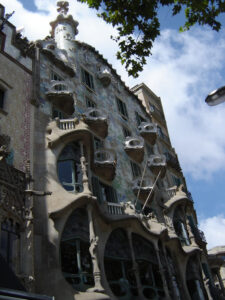
- Passeig de Gràcia (3 paradas, zona de Gaudí)
- Liceu (pleno centro de La Rambla)
También puedes moverte a pie si prefieres empezar el día caminando, ya que estás justo en la base del centro histórico.
Hay algunos detalles prácticos que conviene tener claros antes de usarlo.
No hay descuentos específicos para este servicio. Niños a partir de 4 años pagan tarifa completa, y tampoco hay reducciones para mayores o personas con discapacidad. Eso sí, los autobuses están adaptados y cuentan con rampa para sillas de ruedas.
Otro punto importante: aunque es un servicio muy cómodo, en horas punta puede haber algo de cola, sobre todo al bajar varios cruceros a la vez. Aun así, el sistema suele moverse con bastante agilidad.
En la práctica, el Cruise Bus no es una experiencia en sí, sino una herramienta para empezar bien el día. Te evita caminatas innecesarias dentro del puerto y te deja directamente en una zona donde todo es más fácil.
Si después quieres organizar tu visita por la ciudad, puedes seguir con opciones como el bus turístico desde Plaça de Catalunya, que es una de las formas más simples de ver Barcelona en pocas horas sin complicarte demasiado.
Al final, lo importante es no perder tiempo en el primer tramo del día, y aquí es donde esta lanzadera cumple perfectamente su función.
Aquí tienes una traducción al inglés cortesía de ChatGPT:
English version
How the Barcelona Cruise Shuttle Works (Cruise Bus T3): what you need to know when you get off the ship
When you get off a cruise in Barcelona, one of the first questions is how to leave the port without wasting time. This is where the official shuttle comes in, known as the Cruise Bus or T3 Portbus, which directly connects the terminals with the city center.
It’s a simple service designed specifically for cruise passengers, and in practice it’s usually the fastest way to start your day without complications.
The bus connects all terminals of the Port de Barcelona (A, B, C, D and E, at Moll Adossat) with the area around the Monument to Columbus at Portal de la Pau, right at the start of La Rambla. In other words, it drops you at one of the most practical entry points to the city center.
The journey is short, usually between 10 and 15 minutes, and runs continuously as long as there is cruise activity in the port.
One important thing to keep in mind is that this bus is not part of the city’s public transport system. That means you can’t use cards like the T-casual or tourist travel passes. The system is much simpler.
You buy the ticket directly from the driver:
- €3 one way
- €4.50 return
In practice, the return ticket is usually worth it, especially if you already know you’ll be going back to the ship the same way.
Payment is usually made in cash, and while some buses may accept cards, it’s not guaranteed. It’s best to carry coins or small bills to avoid issues.
As for frequency, there’s not much to worry about. The bus runs roughly every 20 minutes, although this can vary depending on how many cruise ships are in port. During busy times, the frequency often increases.
The general timetable is around 7:30 am to 6:30 pm, but in reality it adapts to cruise schedules: as long as passengers are embarking or disembarking, the service keeps running.
Once you arrive near the Columbus monument, you’re in a very convenient location to move around the city. Just a 2–3 minute walk away is the Drassanes metro station (L3, green line), one of the most useful lines for visitors.
From there you can quickly reach:
- Plaça de Catalunya (2 stops)
- Passeig de Gràcia (3 stops, Gaudí area)
- Liceu (right in the middle of La Rambla)
You can also continue on foot if you prefer to start your day walking, as you’re already at the edge of the historic center.
There are a few practical details worth knowing before using it. There are no specific discounts for this service. Children above a certain age pay the full fare, and there are no reductions for seniors or people with disabilities. That said, the buses are fully accessible and equipped with ramps for wheelchairs.
Another point to consider: although it’s a very convenient service, there can be short queues during peak times, especially when several ships arrive at once. Even so, the system usually moves fairly quickly.
In practice, the Cruise Bus isn’t an experience in itself, but a tool to start your day efficiently. It saves you from unnecessary walking inside the port and drops you straight into an area where everything becomes easier.
From there, if you want to continue exploring the city, you can move on to options like the tourist bus from Plaça de Catalunya, which is one of the simplest ways to see Barcelona in just a few hours without overcomplicating things.
In the end, the key is not to waste time on the first part of the day and this shuttle does exactly what it’s supposed to do.